SAVA-F
Visit sava-f.com Visit sava-p.com Read the full story
SAVA-F is the secure front door for investment submissions, built by Pairti with SAVA-P.com. It handles branded intake, AI-supported triage and structured curator review, and gives curators a path into SAVA-P when an opportunity is ready to share.
SAVA-P already owned the mandate and the platform downstream. What it needed was intake and triage that left the call with the curators who own the mandate, and that promoted selected work into SAVA-P instead of sitting beside it as a separate tool. Pairti brought the engineering.
A careful first read of every deck
If you run a fund or lead an angel group, you already know where the week goes. Decks arrive faster than anyone can read them properly, the claims inside them take real effort to test, and the follow-up emails to founders tend to wait until someone finds a spare evening. SAVA-F takes that first pass off your plate. It reads each submission, pulls out the claims the founder is making and checks what it can, proposes a pre-screening score against your own criteria, and drafts the questions worth asking. Your reviewers then make the calls, with the evidence laid out in front of them.
To show you how that plays out, we put Knox, one of Pairti's own portfolio companies, through the live product exactly as any founder's deck would go through it. What follows are the real screens from that run, in the order a deal moves. These screens show Knox at one point in its life.
A deal starts when a founder submits, and SAVA-F respects their time from that first step. The AI reads the data pack they upload and pulls their details into the submission form, so most of it is already filled in by the time they look at it. The founder reviews what's there, changes anything that needs changing and then submits, which means less retyping for them and full control over what reaches you. For your team, that means submissions arrive consistent and ready to read.
We've swapped people's names for their roles and given the other submissions placeholder names. Financial figures, contact details and some of the other submissions' details are blurred or removed, as is the web address the browser showed, and the dashboard is cropped.
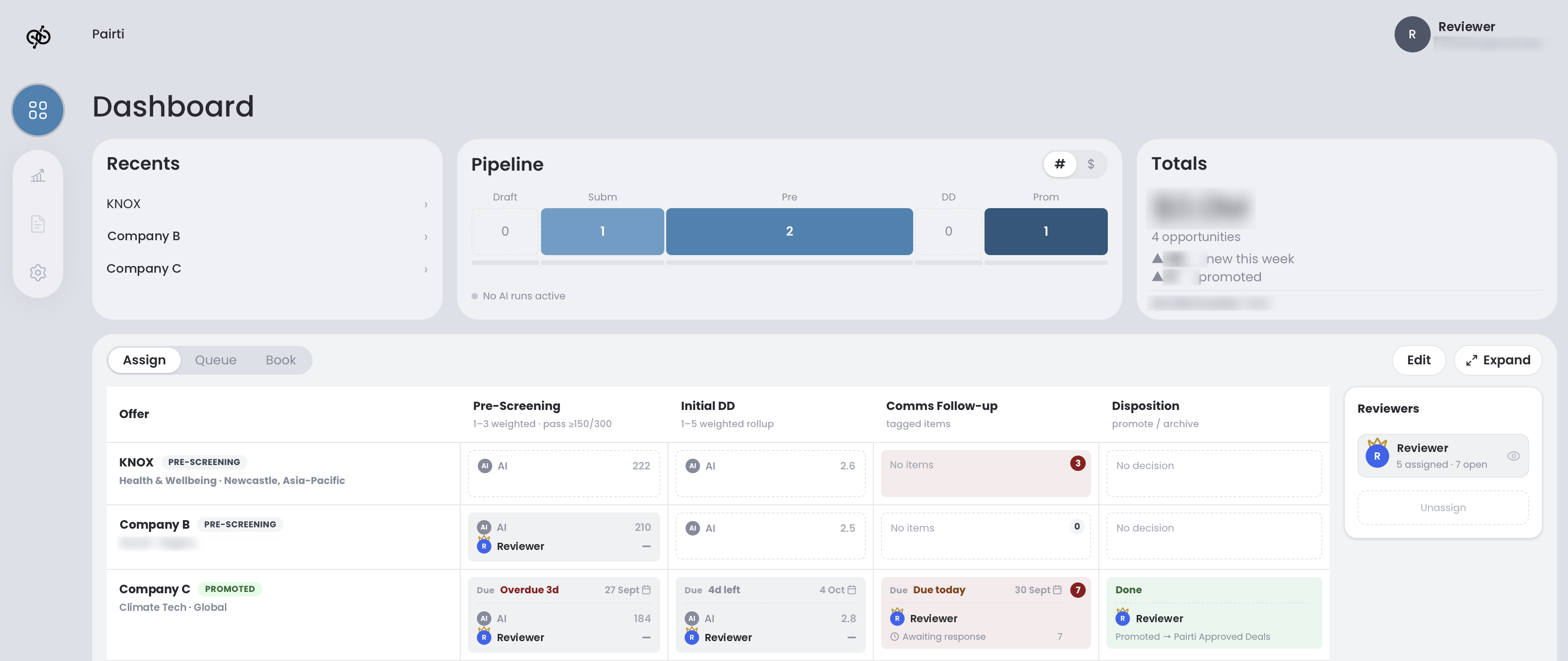
Once a submission is in, it lands on your dashboard. Each opportunity sits in a pipeline that runs from draft through submission, pre-screening and due diligence to promotion, so you can see at a glance where your deal flow is bunching up. The assign board underneath shows who owns each deal at each stage, what the AI has already scored, which founder follow-ups are waiting on a reply and what has been decided. Knox sits in pre-screening with an AI score of 222 already on the board. The other rows are other submissions in the same pipeline, and we've hidden their names and some of their details.
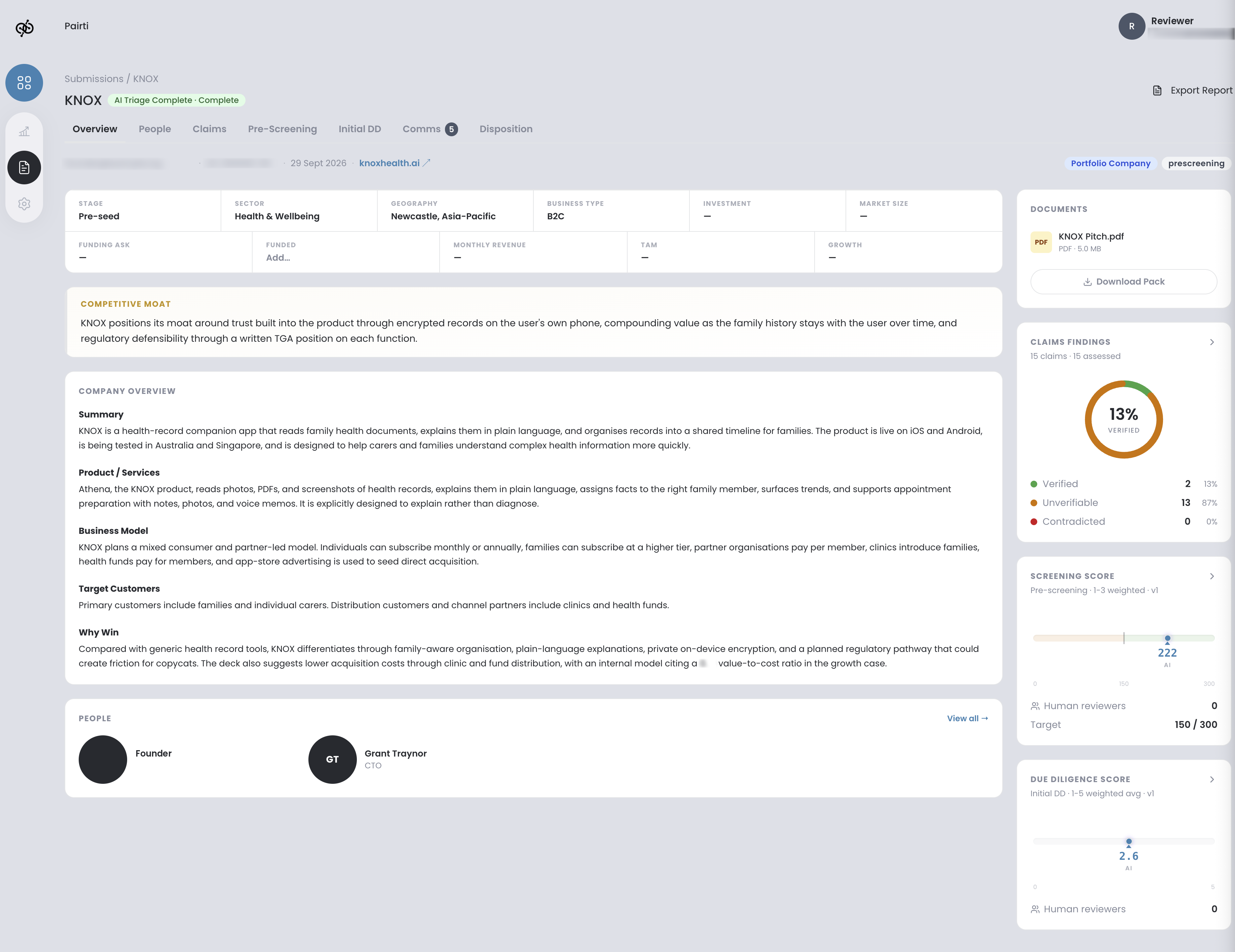
Open the Knox submission and you get one page that tells you what you're looking at. The AI triage has already run, so the stage, sector, geography and business model are filled in from the deck, the company overview and competitive moat are summarised in plain language, and the founding team is listed. Down the right-hand side sit the numbers that matter for a first decision. Of the 15 claims found in the deck, 13% were verified, the AI's pre-screening score is 222 out of 300 against a target of 150, and an initial due diligence score of 2.6 out of 5 is ready for review. Each score sits beside a separate count of human reviewers, so it's always clear whose judgment a number represents.
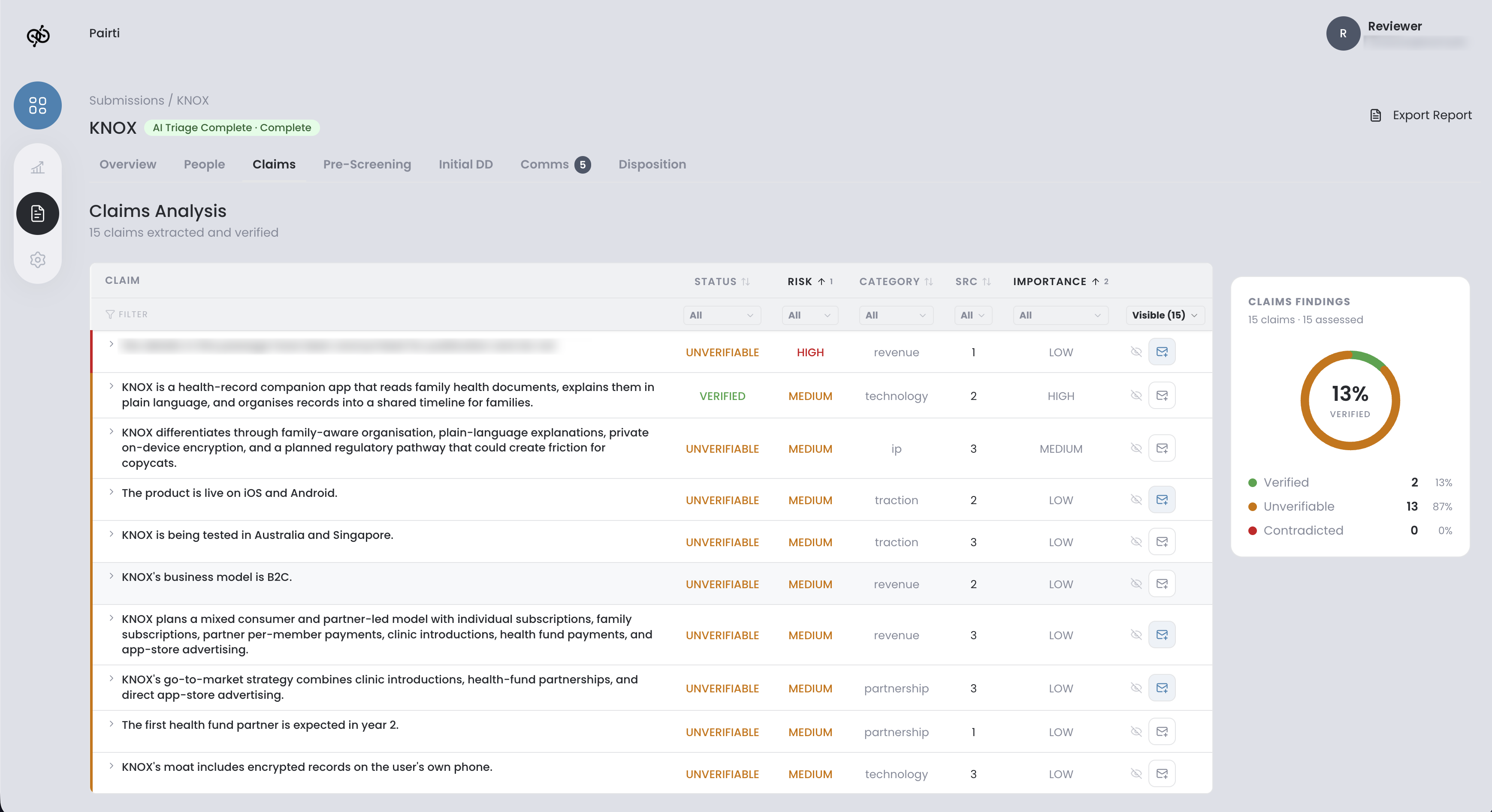
The claims view does the slowest part of early diligence first. Every factual statement in the deck becomes a row with a status, a risk rating, a category such as revenue, traction or partnership, the number of sources checked and an importance rating. A claim comes back verified, unverifiable or contradicted. For Knox, the core description of the product was verified, while claims such as the product being live on iOS and Android and in testing in Australia and Singapore came back unverifiable from what was available. Across all 15 claims, 2 were verified, 13 were unverifiable and none were contradicted, which shows you exactly where to push. You can sort and filter by any column, and any claim can be tagged for follow-up with the founder.
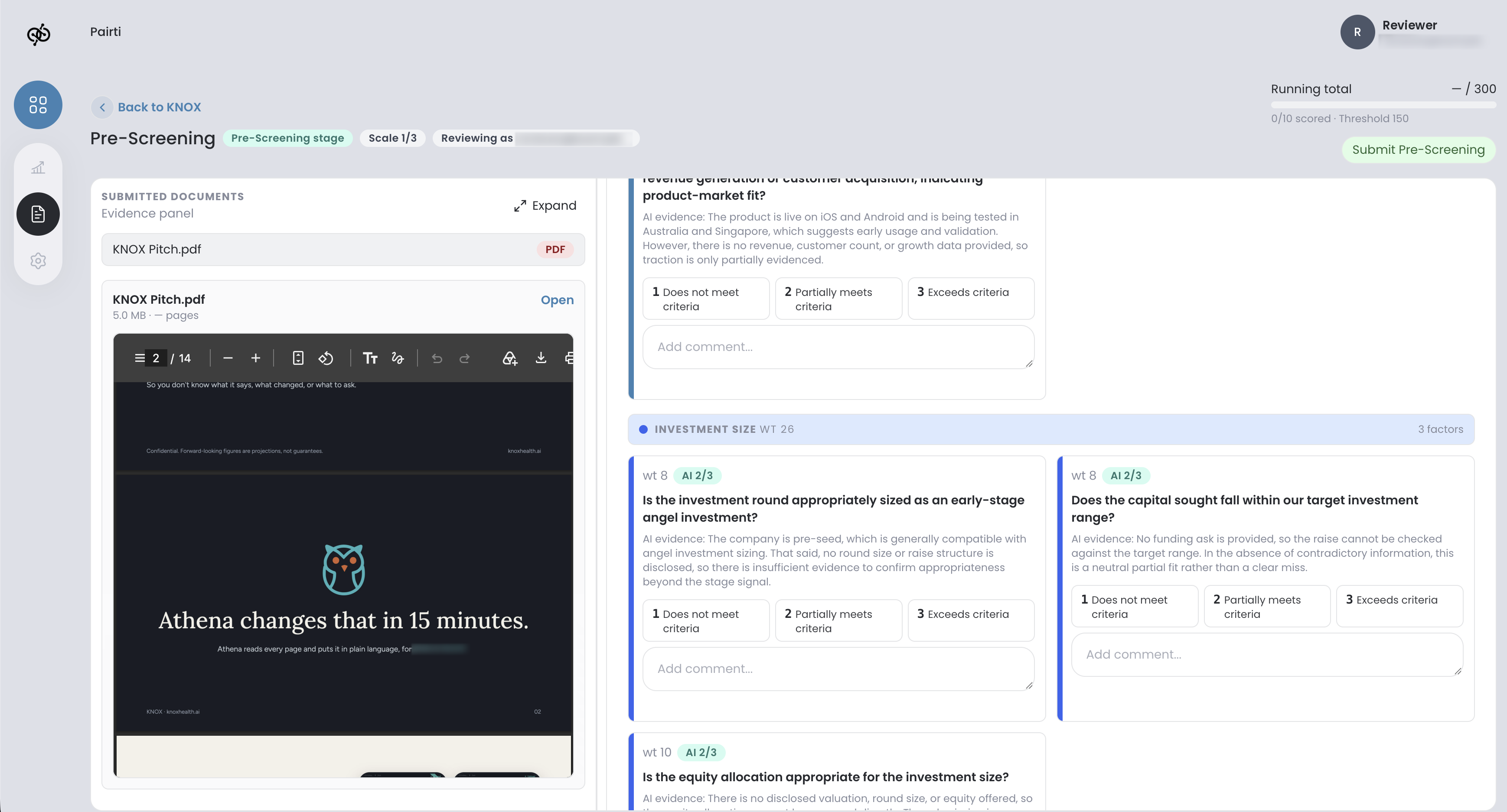
Pre-screening is where the human stays firmly in charge. Knox's deck sits open on the left so your reviewer can check anything against the source. On the right, each of your weighted screening questions shows the AI's evidence in a sentence or two and the score it would suggest, clearly marked as an AI suggestion, while the actual score buttons stay empty until your reviewer picks one. The running total at the top only counts what your reviewer has scored, and your pass threshold, here 150 out of 300, sits right beside it. The AI does the reading and makes its case, and the score that counts is always your reviewer's.
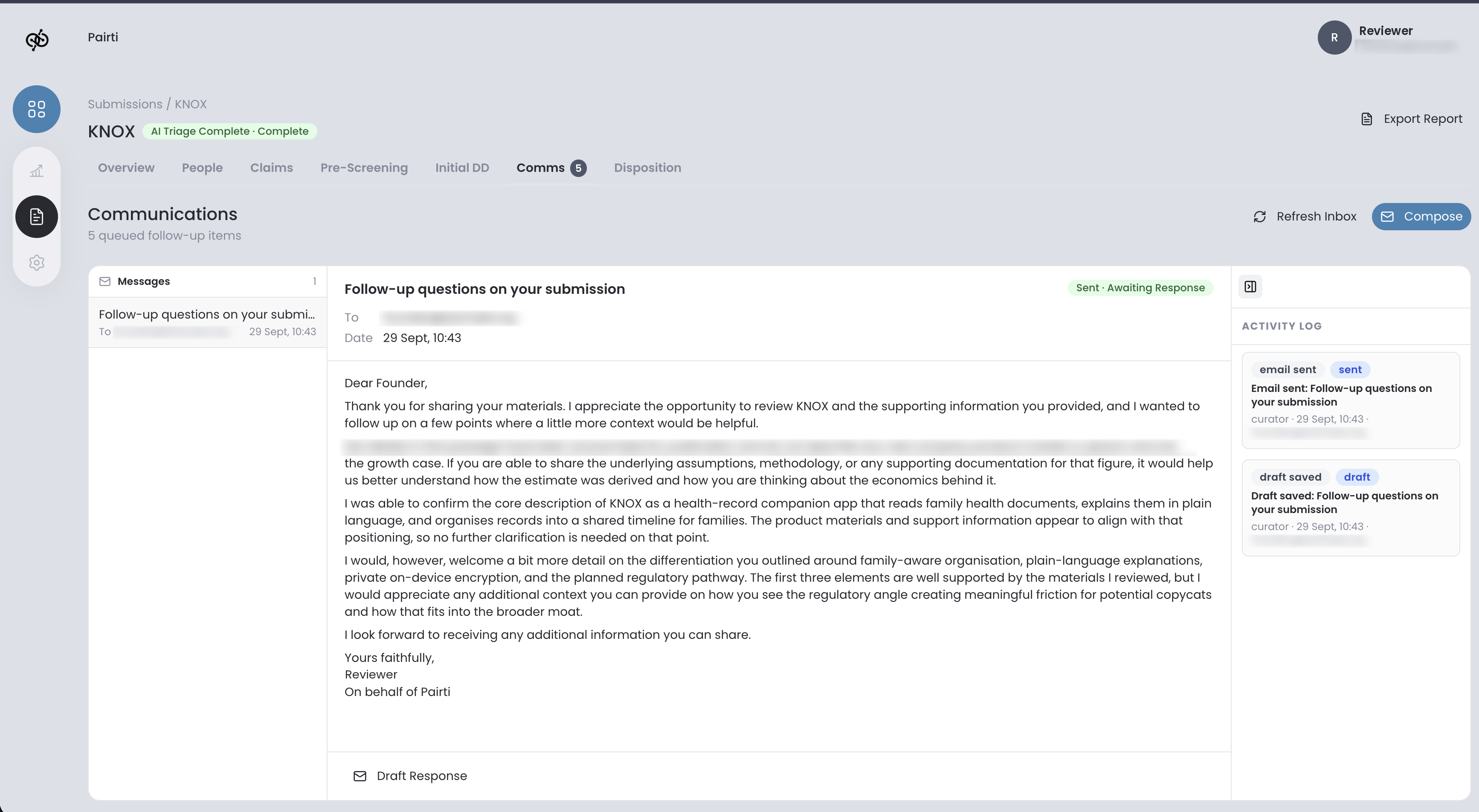
When claims can't be verified, the natural next step is to ask the founder, and SAVA-F drafts that email for you. The draft to Knox thanks the founder, names the specific points that couldn't be substantiated from the materials, says what was confirmed so nobody is asked twice, and asks for more context on how the planned regulatory pathway protects the product from copycats, all in a courteous, professional tone. Your reviewer checks it and sends it from the platform, and the activity log records when the draft was saved and when it went out, so the thread stays attached to the deal instead of disappearing into someone's inbox. This one has been sent and is marked as awaiting a response. When the founder replies, their answers and any attachments they send back flow into the deal, and the AI re-scores the claims and screening questions they touch. Later due diligence passes take that Q&A into account too, so the scores your reviewers see reflect the conversation so far, and the decisions stay with them.
None of this replaces your judgment, and it isn't meant to. SAVA-F reads every deck with the same care, shows you its evidence and keeps every score, decision and message with a named reviewer, so your team can spend its hours on the deals and conversations that deserve them. If you'd like to see it working on your own deal flow, we'd be glad to walk you through it.
Knox in our portfolio · Talk to Pairti
Related
Live product: sava-f.com. Platform family: sava-p.com. Engagement story: SAVA-P case study.