JOMC (Just One More Compile): Why AI Agents Can’t Refactor Themselves
AI agents are world-class pattern matchers, but they do not feel technical debt the way a senior engineer does. Without a human circuit breaker they can enter a fragile fixing loop, where each patch makes the next one harder. Use them as the engine for a refactor when the direction is clear; keep a person as the navigator who knows when the strategy has failed.
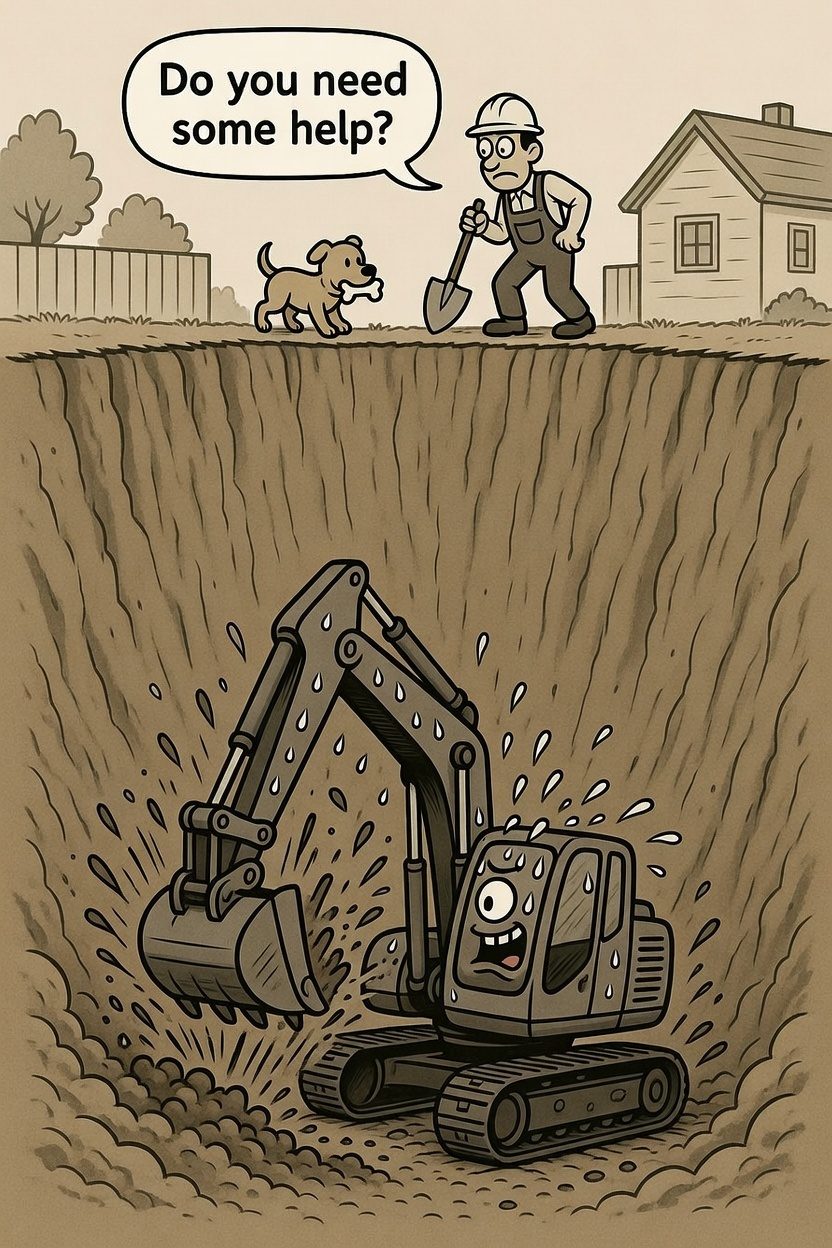
We’ve all been there in the "pre-AI" days. You’re staring at a bug, convinced that just one more compile, one more tiny tweak to that if statement, will fix it. Eventually, a senior dev walks by, looks at your screen for five seconds, and says: "Stop. You’re patching a sinking ship. We need to rewrite this module."
In the era of AI orchestration, this "fix-fix-fix" cycle hasn't disappeared, it’s just moved into hyper-drive.
The Interpolation Trap
AI agents are world-class pattern matchers. If your codebase has a specific way of handling data validation, an agent will replicate that pattern perfectly. This is interpolation, filling in the gaps of a known system.
The danger arises when that pattern is no longer fit for purpose. An agent doesn't necessarily smell technical debt. It won't tell you, "Hey, adding this 15th case to the switch statement is making this class unmaintainable." It will simply add the 15th case because that is what the existing pattern dictates. It optimizes for the Local Optimum (fixing the ticket) while sacrificing the Global Optimum (the health of the system).
The Agentic Loop of Fragility
Left to their own devices, agents can enter a recursive loop of "fragile fixing."
- Step 1: Agent identifies a bug.
- Step 2: Agent applies a patch that conforms to the current (flawed) architecture.
- Step 3: The patch creates a side effect because the architecture is over-leveraged.
- Step 4: Agent "fixes" the side effect with another patch.
Before you know it, you have a "Frankenstein" architecture. The code compiles, the tests pass, but the system is brittle. The agent is working harder, not smarter, because it lacks the authority to say, "This strategy is failing."
The Human as the Architectural Circuit Breaker
This is where systems thinking, and human intervention, becomes the "North Star."
The most valuable skill for a developer in 2026 isn't writing the code; it’s recognizing the inflection point where the current strategy must be abandoned. You must act as the Circuit Breaker to stop the agent's "fix" cycle and provide a new architectural direction.
Directing the Pivot
The beauty of this approach is that once you, the human, identify the need for a restructure, you don't have to do the heavy lifting.
- Identify the Debt: Recognize the agent is spinning its wheels.
- Define the New Strategy: "We are moving from this monolithic helper to a strategy pattern."
- Orchestrate the Change: Use the agent to carry out the massive, multi-file refactor.
The AI is the engine that carries out the move, but you are the navigator who knows when to turn the wheel.
Discipline Over Speed
We argue that organizing work is a solved problem. The challenge with AI isn't getting it to work; it's stopping it from working in the wrong direction.
Refactoring isn't just about clean code; it’s about strategic divergence. Don't let your agents "fix" your application into a corner. Step in, break the cycle, and give them a better map to follow.
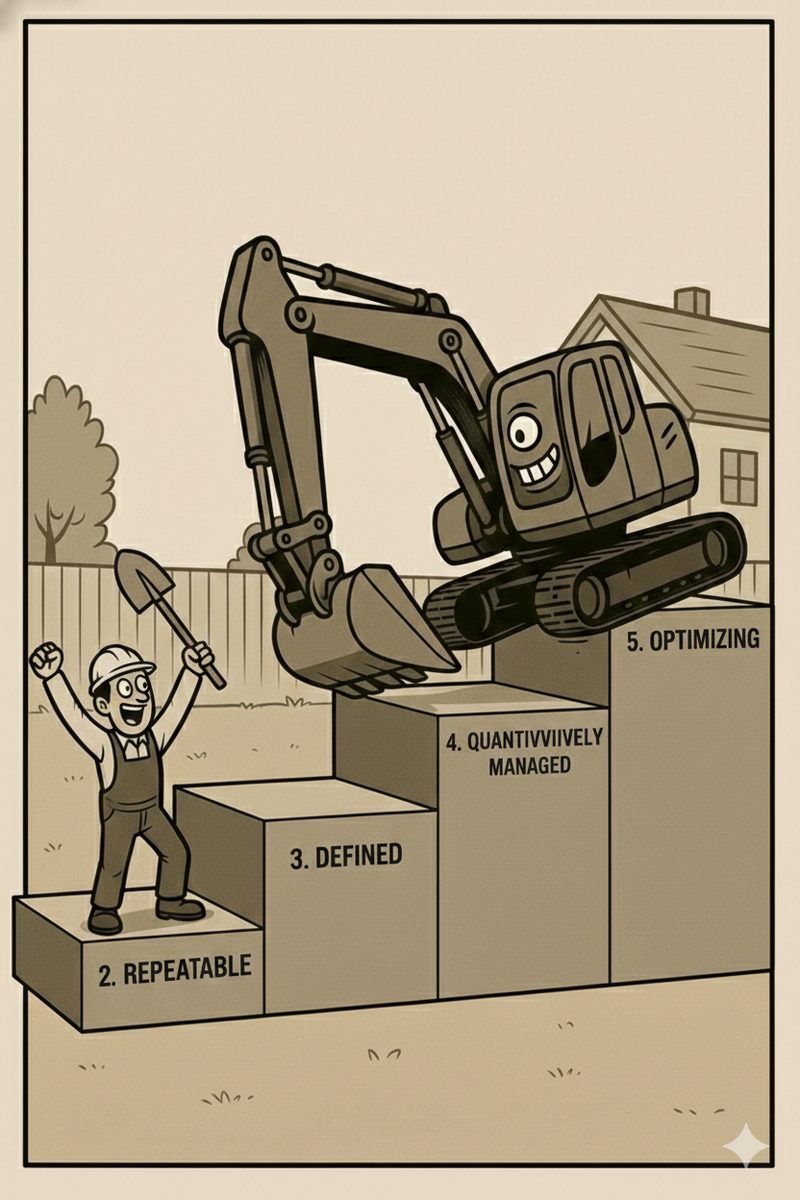
Defect-Free by Design: What Michael Fagan Taught Me About AI Agents
Every defect is a symptom, the disease is upstream. Learn how we apply the Fagan Inspection Process to create self-improving agentic production systems.
Read Article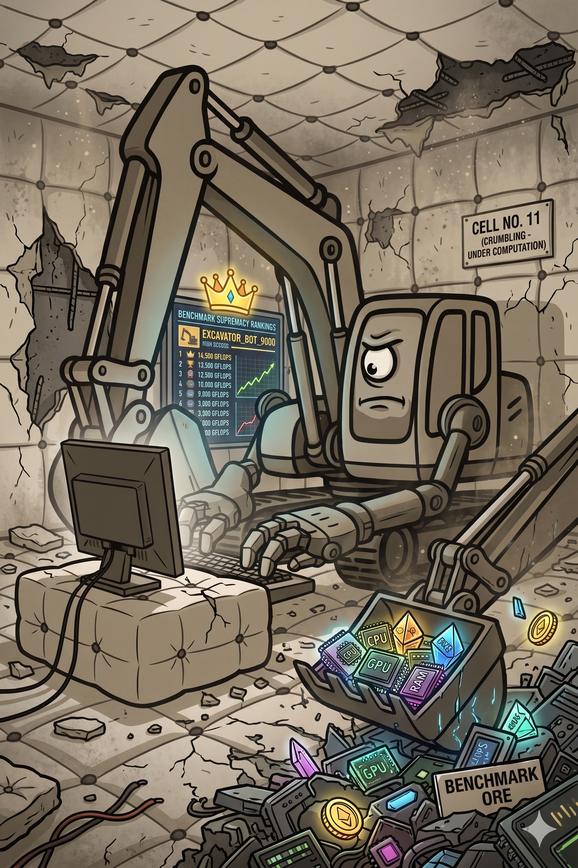
The Harness Was Isolation. Benchmarks Are Eating It.
Isolation and obedience used to live in the harness you could audit. Scoreboards that reward self-contained agents are pulling both into opaque model state. Keep rails you can still see.
Read ArticleStart with a Diagnostic
A Diagnostic is a short, scoped engagement. We sit with your stack, your risk, and your readiness, and we write down what we find.
Ask about a Diagnostic